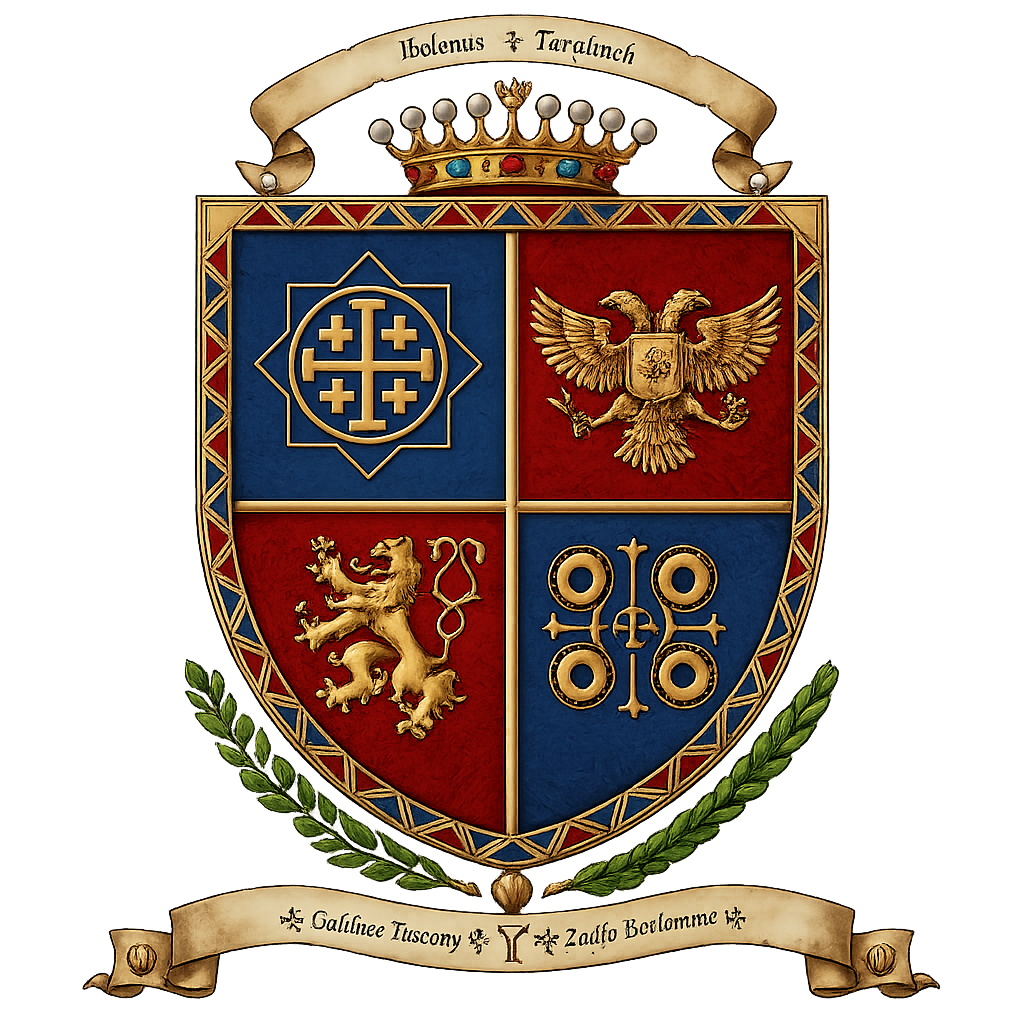

The research methodology combined oral history, official medieval historical records, and ancient DNA analysis to verify key elements of the family history that had been passed down through generations. Notably, the history of the Tarajmeh clan’s ancestors survived over this long period because it was preserved in three books: the Burgundy Book, which recorded the history of the Tarajmeh ancestors; the White Book, which documented their property ownership; and the Black Book, which preserved their genealogy.
Research
The history of Tarajmeh clan is reconstructed from multiple sources: oral traditions passed down through generations, Franciscan records, Latin church archives, historical accounts of medieval Mediterranean trade, scholarly research on Palestinian Christian communities and DNA testing. This multifaceted approach allows us to piece together a narrative that spans thirteen centuries and connects multiple continents.
Understanding the Tarajmeh Clan requires us to draw from diverse disciplines- history, archaeology, linguistics, art history, and cultural studies-to illuminate the lives of these who lived through transformative periods of human civilization.
The research presented on this site represents an ongoing scholarly endeavour. New sources continue to emerge, and our understanding of the clan’s history continues to evolve. We invite researchers, historians, and descendants of the Tarajmeh clans to contribute to this collective effort to preserve and understand this remarkable heritage.
We would like to express our sincere gratitude to Anton Mansour for sharing the oral history passed down by Abu Khalil and preserved by the Mansour family across generations.
We also extend our thanks to Andrey Dabdoub for the valuable information made available through his established website, www.dabdoub.info, as well as to Antonio Dabdoub Escobar’s blog, Peter Dabdoub for his book ‘The Little Bear’, Vincent Talamas, and members of the Sabat family. Their contributions, drawn from family narratives relating to the history of the Tarajmeh family, have provided information that assisted in the Tarajmeh history research.
Research Methodology
This historical narrative has been constructed using a rigorous interdisciplinary approach that combines documentary evidence, oral history, archaeological context, and comparative analysis with other well documented historical communities and phenomenon.
Where sources are incomplete or contradictory, we acknowledge uncertainty and present multiple interpretations. Our goal is not to present a definitive history but to offer a well-researched, nuanced understanding of the Tarajmeh clan’s remarkable journey through time.
We welcome scholarly critique, additional evidence, and collaborative research efforts. The history of the Tarajmeh clan is a living field of study, and we are committed to refining and expanding our understanding as a new sources emerge and new perspectives are brought to bear on this fascinating historical narrative.
Primary Sources
DNA Testing
DNA testing has been used to confirm details of the oral family and clan history.
Franciscan archives
Records from the Franciscan custodians of the Holy Land, including documentation of the clan’s role in safeguarding Christian holy sites and their homeland and their involvement in church activities in Bethlehem from the 14th century onwards.
Latin church records
Official church documentation and registers from Bethlehem, including baptisms, marriages, and other sacramental records that document Tarajmeh clans presence and activities.
Oral histories
Family traditions and oral histories passed down through generations of the Tarajmeh clan, providing invaluable insights into family memory, identity and cultural continuity. The research also included field trips to Italian cities as well as discussions with historians, academics and even contemporary Italian nobility.
Medieval trade records
Documentation of Mediterranean trade networks, including Amalfitan merchant records and references to trade goods and commercial partnerships from the 11th century.
Secondary Sources & Scholarly Works
Palestinian Christian communities
Scholarly research on the history and culture of Palestinian Christian communities, including studies on the role of families like the Tarajmeh in maintaining religious and cultural identity.
Franciscan history in the holy land
Academic works examining the Franciscan presence in the Holy Land, their role as custodians of sacred sites, and their relationships with local Christian communities.
Medieval Mediterranean trade
Historical studies of medieval trade networks, maritime commerce, and the role of merchant families in connecting distant regions and facilitating cultural exchange.
Tuscan history and craftsmanship
Research on the history of Tuscany, including studies of quarrying, stonework, and the role of Craftsman in medieval construction and artistic production.
Pilgrimage and religious tourism
Scholarly works on medieval pilgrimage routes including the Francigena and routes to the Holy Land, and the economic and social impact of pilgrimage whole communities.
External Resources and Further Reading
Official Tarajmeh website
For more information about the Tarajmeh clan, additional historical research, and family resources, contact us below.
Contribute to the Research
If you have historical documents, family records, or other materials related to Behlehem the Tarajmeh clan and other clans, we encourage you to share it with us. Your contributions will help us build a more complete and accurate historical record.