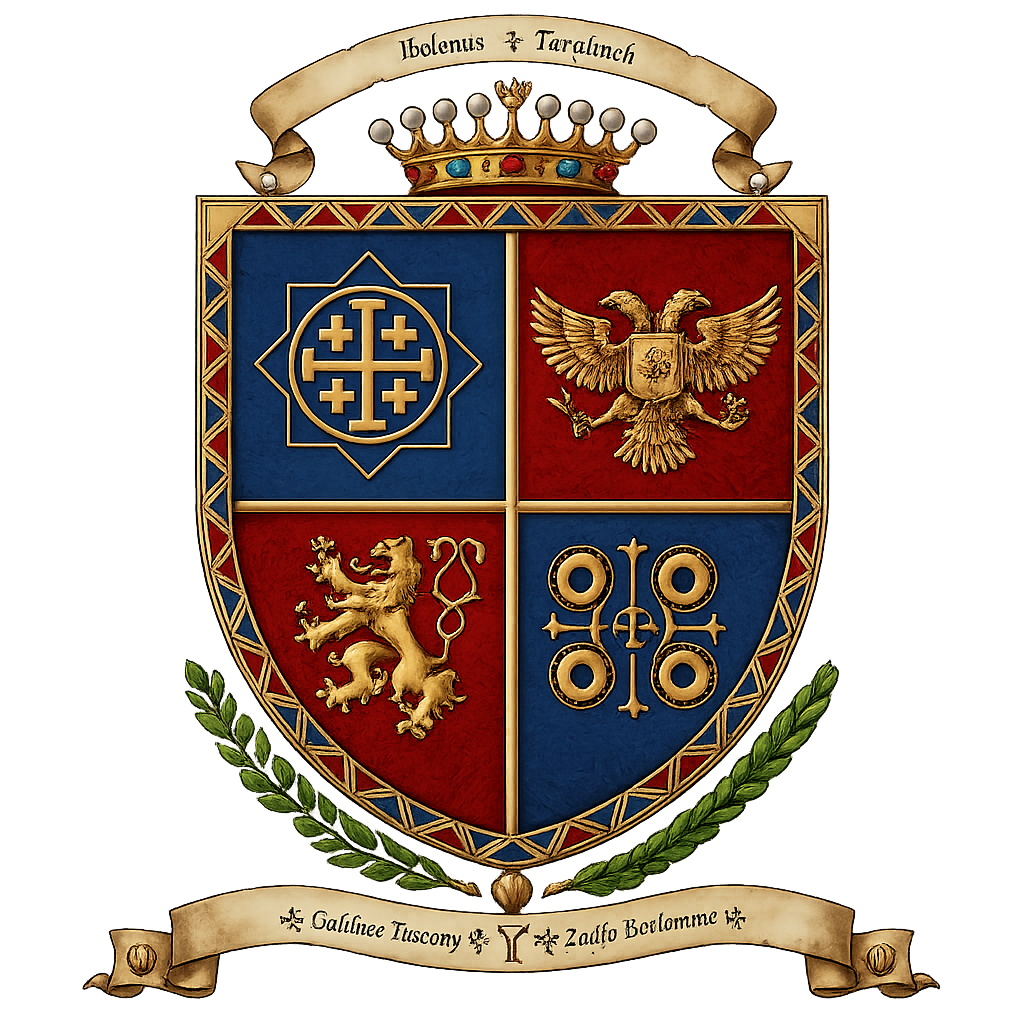

The relationship between the Tarajmeh clan and the Franciscan order represents one of the most significant partnerships in the history of Catholic church in the Holy Land.
Tarajmeh & Franciscans
Since their founding, the Tarajmeh clan forged a close relationship with the Franciscans, whose presence in Bethlehem was established as early as 1309. The Franciscans quickly became prominent figures within the Catholic Church, and in 1342, Pope Clement VI officially recognised them as custodians of the Christian Holy Places, a role that continues to this day.
Probably, without the Franciscans and Tarajmeh, Latin Catholicism in Bethlehem would likely have remained transient and marginal. With them, it endured quietly, continuously, and decisively shaping the later Catholic landscape of Bethlehem Beit Jala, and Beit Sahour.
Today, the Tarajmeh clan remains one of the most respected Christian families in Bethlehem, their heritage intertwined with the sacred history of the Holy Land. Their partnership with the Franciscans stands as a testament to the power of faith, cultural exchange, and the resilience of communities committed to preserving spiritual and cultural heritage across centuries of change.
An Enduring Legacy
The identity of the Tarajmeh clan closely tied to the Catholic Church has remained steadfast through the centuries. Their story is thus inseparable from the history of the Franciscans in Bethlehem and the broader narrative of the Church in the region.
They were reportedly entrusted by the Catholic Church to accompany the Franciscans and safeguard the most important holy sites across the Holy Land.
It is highly likely that the two founding brothers of the Tarajmeh clan had connections to the Franciscans even before arriving in Bethlehem. This pre-existing relationship made it natural for the clan to become part of the inner circle of ‘Turjmani’ serving as translators, advisors, and aids to the Franciscans on diplomatic missions for the Catholic Church.
Guardians of Sacred Spaces
The Tarajmeh clan’s role as guardians of holy sites was not merely ceremonial. Their Multilingual abilities, deep knowledge of local customs, and established networks made them invaluable intermediaries between the Franciscans and the local Palestinian Christian community, as well as with Ottoman authorities.
The members of the clan were known for their fluency in multiple languages, enabling them to serve as guides for pilgrims, guardians of holy places, and diplomatic intermediaries between the Catholic Church and local authorities.
This role extended far beyond simple translation. The Tarajmeh family became custodians of tradition, protectors of sacred sites, and bridges between cultures. Their presence played an important role in the continuity of Catholic worship in the Holy Land during periods of significant and religious tension.
Craftmanship and Spiritual Legacy
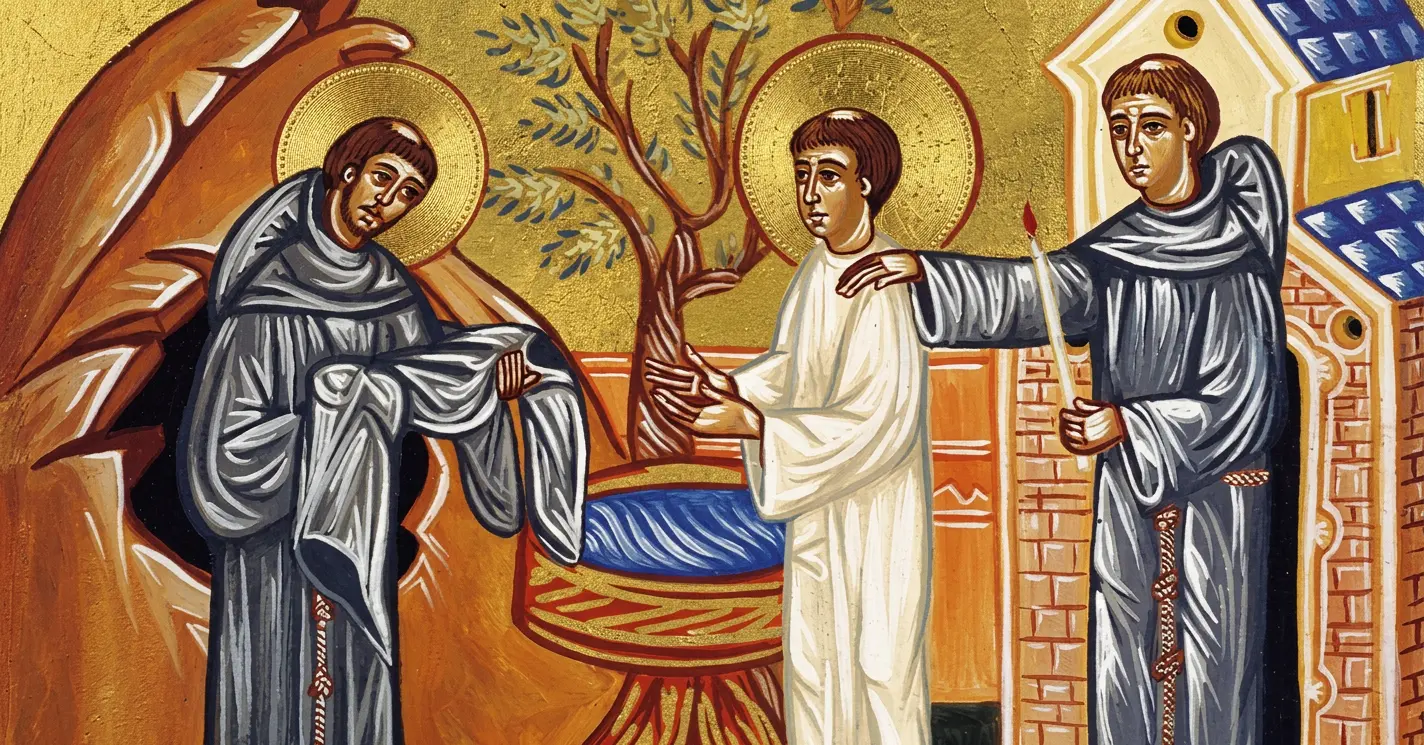
For generations, the Tarajmeh had carved beauty from the land itself. They were taught by the Franciscan monks from Italy the art of working the mother-of-pearl (nacre). The craft involved intricate techniques of engraving, carving, inlaying and filigree to create religious sacred objects.
This industry became one of the main arteries of Bethlehem economy, blending spiritual devotion with economic vitality. This fusion of faith and craft created a unique cultural legacy that continues to define Palestinian Christian artistic traditions.
They have learnt from the Franciscan monks the art of working mother -of- pearl using filigree, engraving, instaria and relief carving techniques, in producing religious sacred objects which are sold to the pilgrims and exported overseas. This fusion of faith and craft created a unique cultural legacy that continues to define Palestinian Christian artistic traditions.
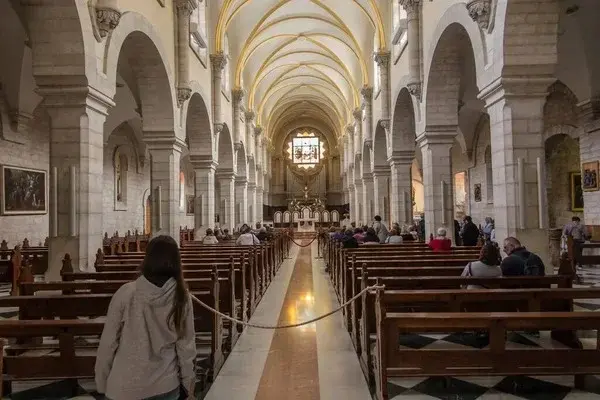
Image of inside the Franciscan Convent of St Catherine in Bethlehem.
(From: https://www.custodia.org/en/news/the-franciscan-community-in-bethlehem-our-daily-prayers-for-peace-from-the-place-of-the-nativity/)
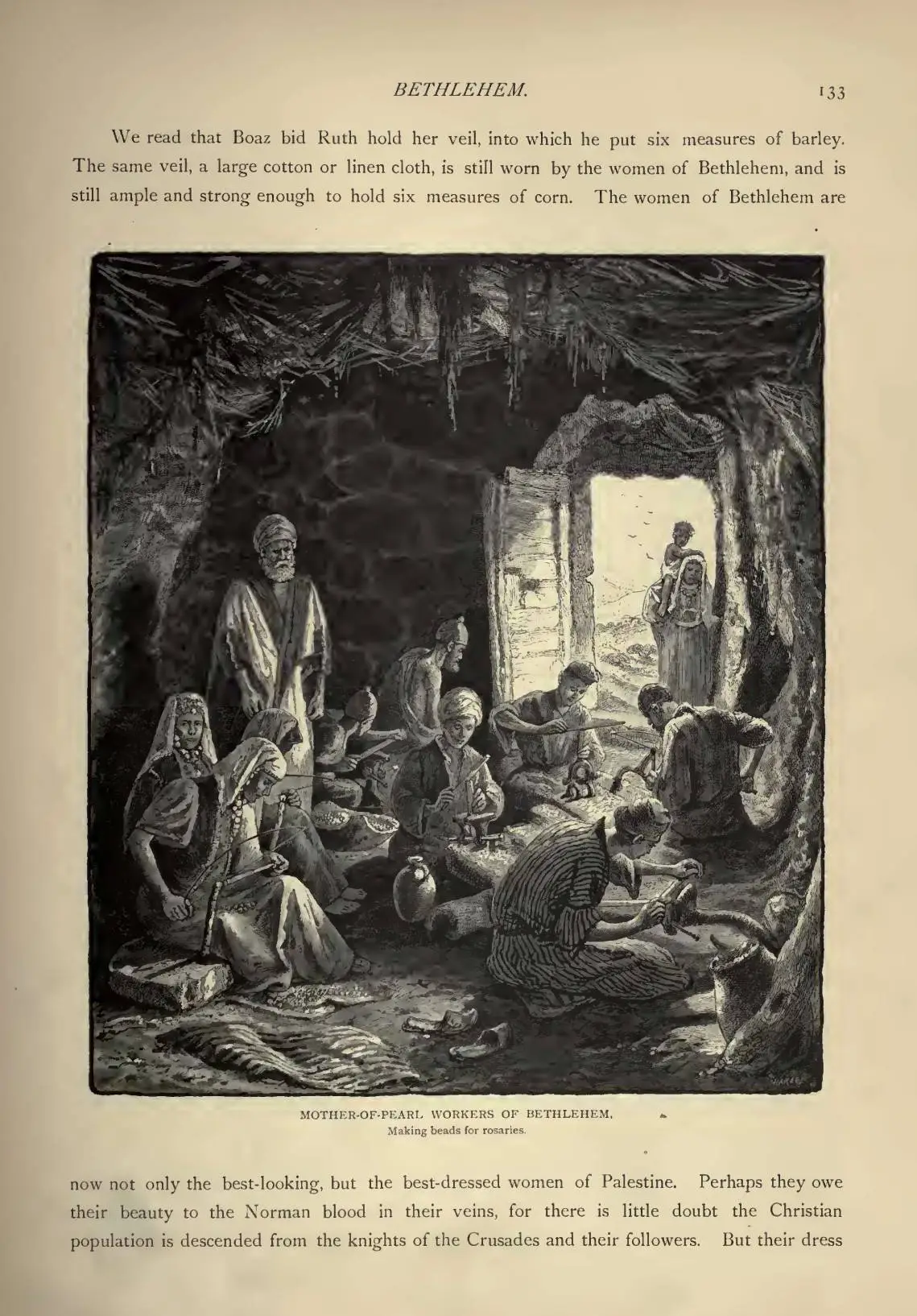
The Rise of Bethlehem’s Master Pearl Carvers
From the 15th to the 19th century, the Tarajmeh clan and the Franciscan Friars forged a remarkable partnership that transformed Bethlehem into a center of excellence for religious craftsmanship. Together, they established a thriving monopoly in the production and trade of religious objects made from mother-of-pearl and wood, serving both Bethlehem and Jerusalem.
The Franciscans had been active in education in the Holy Land since 1598, creating a strong foundation for artistic training and knowledge exchange. While the Tarajmeh artisans dedicated themselves to craftsmanship, innovation, and the refinement of techniques, the Franciscans developed extensive trade networks and organized technical apprenticeships that nurtured generations of skilled craftsmen.
Through the Franciscan schools of Terra Santa, Bethlehem’s master artisans passed their expertise to new apprentices, creating a continuous cycle of learning, mastery, and artistic growth. Skills acquired from diverse traditions and regions were carefully adapted to express distinctly local Christian themes. Guided by the Franciscans, these artistic traditions were promoted, preserved, and managed with a clear and coherent vision.
Drawing on centuries of accumulated knowledge and influences from across the world, a distinguished group of Bethlehemite craftsmen established what would become a globally recognized Palestinian school of pearl carving. Many of its leading figures came from the Tarajmeh clan. Their work developed a unique artistic identity, ushering in a new era of creativity and craftsmanship. Over time, this school achieved an extraordinary level of refinement, producing works whose beauty and sophistication were unmatched anywhere in the world.
By the 18th century, the entrepreneurial spirit of the Tarajmeh clan had expanded beyond craftsmanship alone. While many family members continued to excel as master artisans, others emerged as independent merchants, carrying Bethlehem’s renowned mother-of-pearl creations to distant markets. Through their growing commercial networks, these traders helped spread the reputation of Bethlehemite craftsmanship across the globe, further strengthening the city’s standing as a center of artistic excellence and ensuring that the legacy of its master pearl carvers reached far beyond the Holy Land.