

Family tradition holds that Simon I, and his family conducted successful trade while in Cilicia. We know during the period he was living in Cilicia trade was conducted through several ports. Ayas became one of the principal Mediterranean gateways between western European commerce and the overland commercial routes leading towards Tabriz and the wider Asian trade network

Image 1: Medieval Port Image representing Ayas port (Generated fromhttps://gemini.google.com
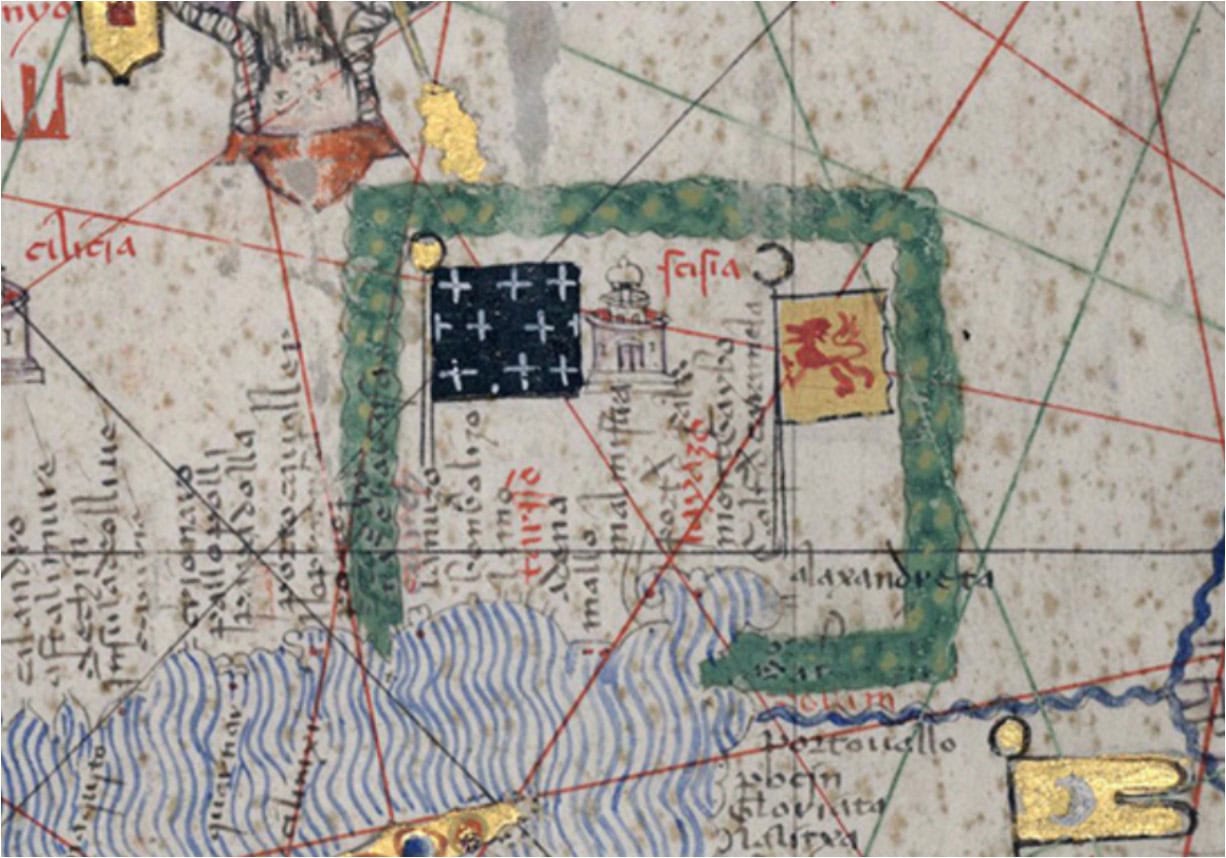
The port was used by Italian traders from Venice, Pisa, and Genoa, as well as traders from Marseille and Catalonia, who travelled the route through Bagras. Bagras (also known as Baghras or Gaston Castle) is closely connected to the Belen Pass toward Mardin, Pyle Passage (depicted in image below) and the Cilician Gates. The Cilician Gates share a profound geographic and strategic connection with Sarvandikar (Svarnda), Marash, and Antioch, known as the Silk Route. When this trade was disrupted, the family was aggrieved and blamed the Armenian leadership for drawing them into the wars against the Mamluks alongside the Mongols.
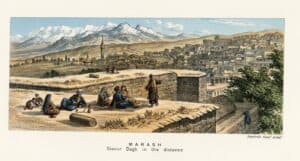
Image 3: Image depicting the Pyle Passage Cilicia (From: Created around 1879 by Rev. Edwin John Davis from his book Life in Asiatic Turkey: A Journal of Travel in Cilicia-Pedias, and Parts of Lycaonia and Cappadocia. https://commons.wikimedia.org/wiki/File:DAVIS%281879%29_p261_THE_PYLAE_CILICIAE.jpg


Image 3: Image depicting the Pyle Passage Cilicia (From: Created around 1879 by Rev. Edwin John Davis from his book Life in Asiatic Turkey: A Journal of Travel in Cilicia-Pedias, and Parts of Lycaonia and Cappadocia. https://commons.wikimedia.org/wiki/File:DAVIS%281879%29_p261_THE_PYLAE_CILICIAE.jpg
For much of the 13th century, European merchants (primarily Venetians and Genoese) relied on major Crusader outposts like Acre, Jaffa, Tyre, and Antioch to receive luxury goods from the Far East. However, the Mamluk Sultanate, under leaders like Baybars and Al-Ashraf Khalil, systematically captured and dismantled these coastal strongholds to prevent future Crusader landings. The fall of the Crusader-controlled Syro-Palestinian ports during the Mamluk campaigns of the late 13th century especially after the fall of Acre in 1291 directly triggered an increased commercial boom for the port of Ayas (Aias). Ayas rapidly transformed into the primary economic gateway between Europe and the Silk Road.
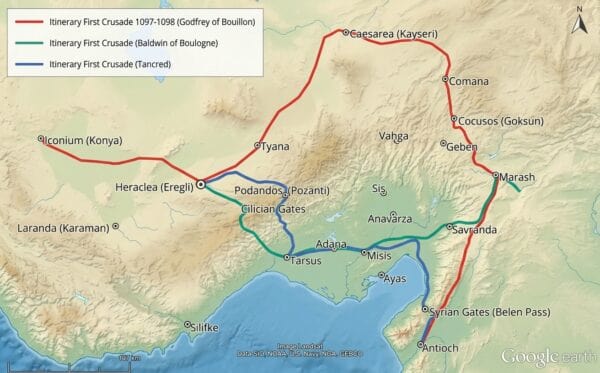
Image 4: Cilicia Map showing location of Fortifications and settlements in particular Marash and Savranda. (THE ORIGINS, DEVELOPMENT, AND SPATIAL DISTRIBUTION OF MEDIEVAL FORTIFICATIONS AND RURAL SETTLEMENTS IN CILICIA 1075-1375)
The Venetians also traded with Korykos, Adana and Kopitar located north of Sis, the capital of Cilicia from middle of 12th century until the fall of Cilicia Armenia Kingdom in 1375. The three cities were markets for rural produce and centres of manufacture. The inclusion of these inland cities and villages in the treaties, at Genoa’s and Venice’s request, suggests that in the first half of the thirteenth century their merchants were primarily attracted by indigenous products.
A major development in the economy of Cilician Armenia took place from the mid-thirteenth century onward. The earlier Mongol expansion in Asia facilitated trade across the continent. More specifically, the submission of King Hethum I to Mongol sovereignty in 1254 and his good relations with Hulagu, Ilkhan of Persia from 1256, ensured peace and stability along the route linking the Mediterranean shore of Cilician Armenia to Tabriz. Chinese silk travelled through Ayas on its way to Genoa in 1257. Ayascommercial function was further boosted after the Mongol incursion into Syria in 1259-1260.
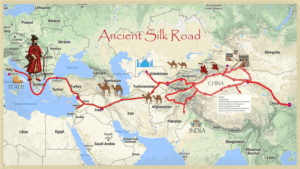
Image 5: The Silk Road passing through Cilicia and Byzantium now Turkiyea (Modified From: https://silkroadtoday.com/contact/ )
It is well documented that the Venetians maintained trading quarters in Armenian Cilicia and entered into several commercial treaties with the local rulers. These agreements granted Venetian merchants various tax privileges, including exemptions or reduced duties for non-resident traders. It has been narrated that the ancestors of the Tarajmeh traded with both the Venetians and Genoese, but they preferred to trade with the Venetians as they were easier to work with.
During the 13th century and the first quarter of the 14th century, the Venetians concluded several trade treaties with the rulers of the Armenian Kingdom of Cilicia. As part of their efforts to promote and expand their commercial activities, they have naturalised several local Armenian merchants and other nationalities such as Syrians.
What was the benefit for the Venetians to naturalise some local traders. It is understood that when a Venetian merchant arriving at Ayas was entering a multilingual, multi-ethnic commercial environment. Knowing the Venetian language or having Venetian citizenship was not enough. Successful trade depended heavily upon people who understood the local markets, caravan routes, currencies, languages, credit networks and political relationships.
That is where naturalised Armenians and Syrians became particularly useful. Naturalising such a person therefore effectively attached an existing eastern commercial network to Venice. This is precisely the interpretation advanced by historians of Venetian/Genoese commercial practice: naturalisation could allow indigenous merchants to acquire the legal status of Venetian or Genoese and thereby receive privileges originally designed for merchants from those cities. In the Armenian kingdom specifically, the historian cited in the Birmingham University research by Wei-Sheng Lin argues that Venice used naturalisation to co-opt local merchants who could assist visiting Venetian merchants.
It is understood due to this close relationship with Venetians over time the family became naturalised Venetians and continued to maintain close commercial relationships with Venetian traders. St Catherine Church records in Bethlehem identified Talamay and Jacob II the ancestors of the Tarajmeh Clan as two Italian Knights. Oral history narrates that they arrived Mid 14th Century alongside the Fransiscans, eventually settling in Bethlehem.
Further context comes from the account of Laurent d’Arvieux (1635-1702), a 17th Century French diplomat, whom King Louis XIV sent in 1658 as an envoy to Syria, Lebanon, and Palestine to assess the condition of the Christian communities. During his travels, d’Arvieux visited Bethlehem and reported the presence of a Venetian colony located near the Church of the Nativity.
The Franciscans and Venetian merchants in Cilicia Armenia
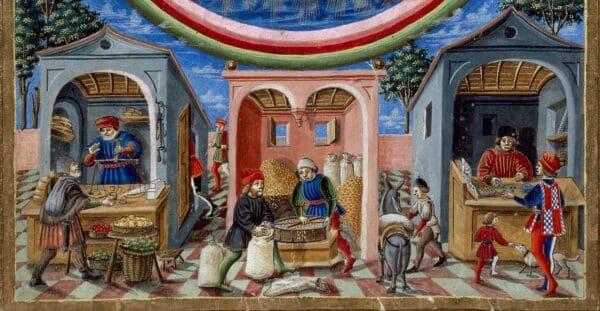
Image 6: Image of a miniature depicts a bustling medieval marketplace and commercial district (MeisterDrucke-1022275).jpg
A pact negotiated between Venice and the Armenian Kingdom provided Venetian merchants with commercial privileges and possessions including commercial facilities, lodgings and even religious buildings.
Franciscan friars operated within the same wider Latin urban environment as the Venetian merchants of Cilicia. The Franciscans maintained their own religious establishments, while Venetian merchant communities possessed their own institutional structures, including the church of San Marco at Ayas. Nevertheless, the two networks overlapped geographically and functionally: Franciscan missionaries travelled along the same Mediterranean and Near Eastern routes used by Italian merchants and also passed through the same ports such as Ayas and sometimes formed direct relationships with merchants. Giovanni da Montecorvino provides a particularly clear example: in 1289 he embarked from Venice or Ancona, travelled via Antioch and Ayas to Sis, and subsequently continued to Tabriz, where the merchant Pietro da Lucalongo joined him.
During the late thirteenth century, the Franciscan Order expanded its missionary activities throughout the eastern Mediterranean and the Mongol territories. Cilician Armenia became an important centre for this expansion, serving as a channel for religious and diplomatic cooperation between the Armenian kingdom and Rome. By the end of the century, Franciscan establishments had been established in important Armenian centres, including Sis and Tarsus.
King Het’um II (Hethum II), who belonged to the Armenian royal dynasty of Cilician Armenia, actively encouraged these connections. He approached Pope Nicholas IV (1288–1292), requesting Franciscan missionaries to serve in his kingdom. His interest in the Franciscan movement went beyond diplomatic and religious cooperation, however, and developed into a deeply personal spiritual commitment.
One of the most remarkable aspects of Het’um II’s reign was his devotion to Franciscan spirituality. Around 1293, he abdicated the throne and entered the Franciscan Order, adopting the religious name John (Hovannes). Thereafter, he became known as Brother John. His decision represents an unusual and significant intersection between Armenian royal tradition and the Franciscan religious movement, demonstrating the influence of Western religious orders within the Armenian kingdom.
This historical context may also be relevant to the ancestry of the Tarajmeh family. As discussed in Blog 7 (Part 1), the Tarajmeh ancestors are believed to have intermarried with the Armenian royal dynasty to which King Het’um II belonged. It is therefore possible that the family’s connection with the Franciscans originated during the period of Het’um II’s rule in Cilician Armenia, when relations between the Armenian court and the Franciscan Order were developing. His subsequent decision to abandon the throne and enter the Franciscan Order adds an interesting dimension to this historical period.
The presence of both the Franciscans and Venetian commerce during the Tarajmeh ancestors’ period of residency, from the last Quarter of 13th century in Cilicia Armenia, is assumed would have had a lasting impact on their future.
The Decline of Mongol Power and Increasing Mamluk Pressure on Cilician Armeni
The decade between 1310 and 1320 marked a volatile turning point for the Armenian Kingdom of Cilicia, as it shifted from a centre of global trade into a community facing severe displacement and outward migration. Internal instability peaked during the reign of King Oshin, from 1307 to 1320. Pro-Latin factions among the Cilician nobility favoured a union between the Armenian Apostolic and Roman Catholic Churches to secure military aid from Europe, a proposal that met immense pushback. For decades, Cilicia had relied on an Armeno-Mongol alliance to withstand regional threats, but by the 1310s the Mongol Ilkhanate had embraced Islam and entered its own period of decline. Cilicia found itself geographically isolated, largely fighting alone against the surrounding regional powers.
The Mamluk Sultanate steadily tightened its pressure on the Armenian kingdom. Repeated military campaigns devastated the countryside, captured key fortresses, and weakened the economy. Armenia’s traditional allies, the Crusader states, had largely disappeared, while Mongol power in the region was declining and could offer only diminishing assistance.

Image 7: A miniature depicting a crowned king, traditionally interpreted as Alexander the Great, speaking to a group of armed soldiers or warriors, from a 14th-century illuminated Armenian manuscript of the Alexander Romance (from: Armenian illuminated manuscript of XIV century (Venice, San Lazzaro, 424)
Cilicia’s vulnerability came to a head in 1320, just as King Oshin died and his ten-year-old son, Leo IV, inherited the throne. The Mamluk Sultan Al-Nasir Muhammad launched a brutal invasion that ravaged the plains of Cilicia. Cities such as Tarsus, Adana, and Mamistra were pillaged, and the vital commercial port of Ayas was burned. Because of the short maritime distance, the Frankish Lusignan Kingdom of Cyprus became the primary refuge for fleeing Cilician nobility, merchants, and warriors. From 1320 onward, the Armenian community in Cyprus grew rapidly, and some formed military garrisons in Kyrenia in 1322. The reign of his son Levon IV (1320–1341) witnessed a significant change in the region’s geopolitical configuration as the Mongol ilkhanate collapsed in 1336.
In 1336 and 1337 the Mamluk Altun Bugha’s forces seized several key Cilician cities (Mamistra, Adana, Ayas, and Tarsus) and looted their wealth. Again, defeated by the Mamluks, Levon IV dispatched a delegation to negotiate yet another peace treaty. Sultan Nasir imprisoned some of the Cilician delegates and insisted that the new treaty extend Mamluk jurisdiction over Ayas and the territory east of the Pyramos River. Levon IV also agreed to terminate relations with Rome and France, but soon thereafter, refusing to abide by this treaty, he entered negotiations with the pope. Before the negotiations were completed, however, Levon IV was murdered, probably by nobles who opposed his pro-Latin orientation.