
This month our Tarajmeh blog post will be divided into three separate section blogs that will be posted throughout the month. The first section gives a background ancestor movement from Palestine to Celicia Armenia Part 2 expands on the role of trade in Celicia Armenia with Italian merchants and the wider regional silk road. Part 3 analyses the Tarajmeh ancestors’ movement back to Palestine and the impact of the Black Death Plague across the region in the 14th Century. All references for blog 7 will be listed in Part 3.
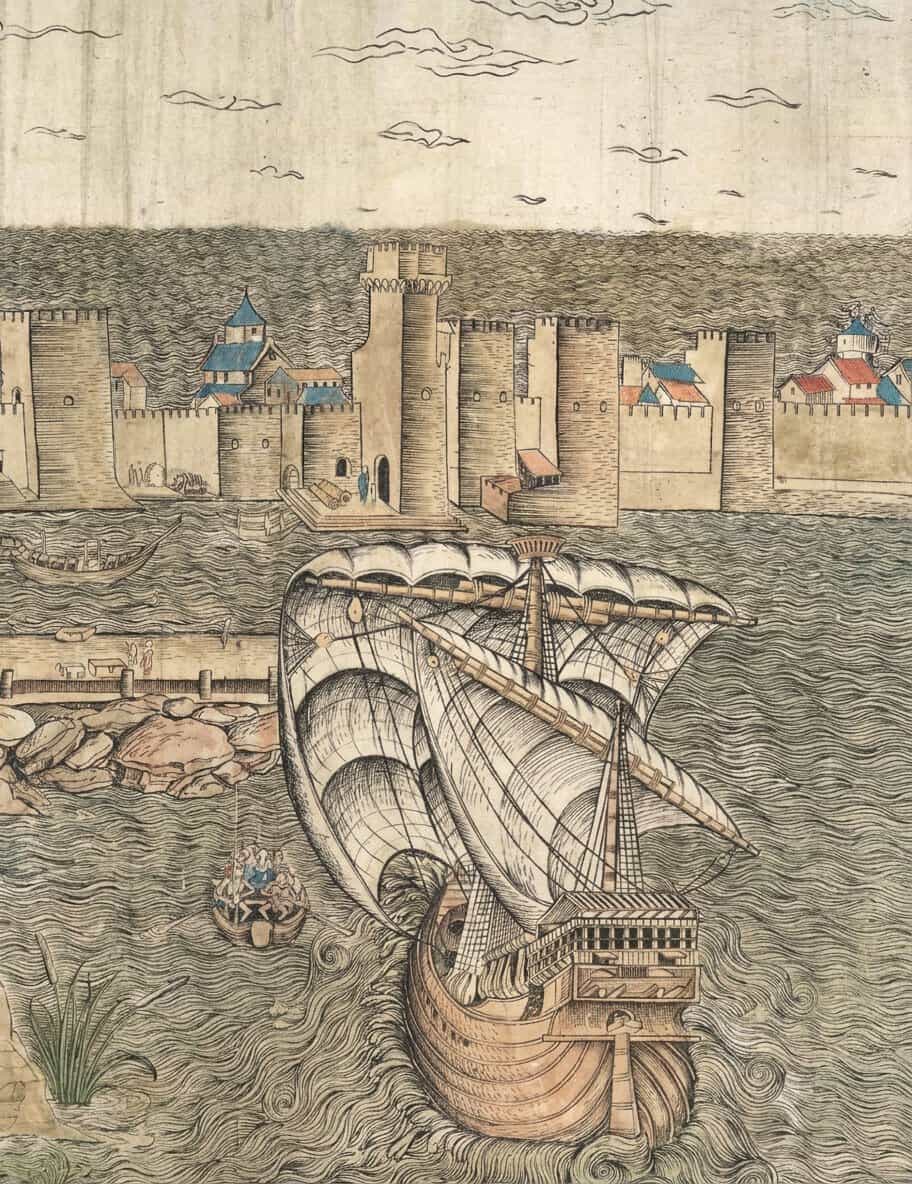
Title Image: Ship bound for the Holy Land, at port in Methoni, Greece, from Journey to the Holy Land (La peregrination en Terre Sainte). Detail of cat. 47, in Jerusalem 1000–1400 every people under heaven, Edited by Drake Boehm et al, 2016.
The history of the Tarajmeh ancestors following their departure from Palestine in the thirteenth century begins against the backdrop of a period of considerable political upheaval in the eastern Mediterranean, particularly during the 1260s. The preceding decades had witnessed profound changes in the political landscape of the region, as the Crusader states faced growing challenges from the Ayyubids and Mamluks powers in Egypt and Syria.
One of the most significant turning points came in 1249, following the death of the Ayyubid Sultan as-Salih Ayyub during the Seventh Crusade. His son, Turan-Shah, succeeded him as ruler. However, his reign was short-lived. In 1250, following the defeat of King Louis IX of France and his forces at the Battle of Mansurah, Turan-Shah was assassinated by rebellious Mamluk commanders. This event marked the end of Ayyubid rule in Egypt and paved the way for the rise of the Mamluks, a military class originally composed of enslaved soldiers who established a new ruling dynasty. Their emergence as the dominant power in Egypt would profoundly shape the political and military history of the region in the decades that followed.
It was within this era of political transformation and regional instability that the later history of the Tarajmeh ancestors unfolded.
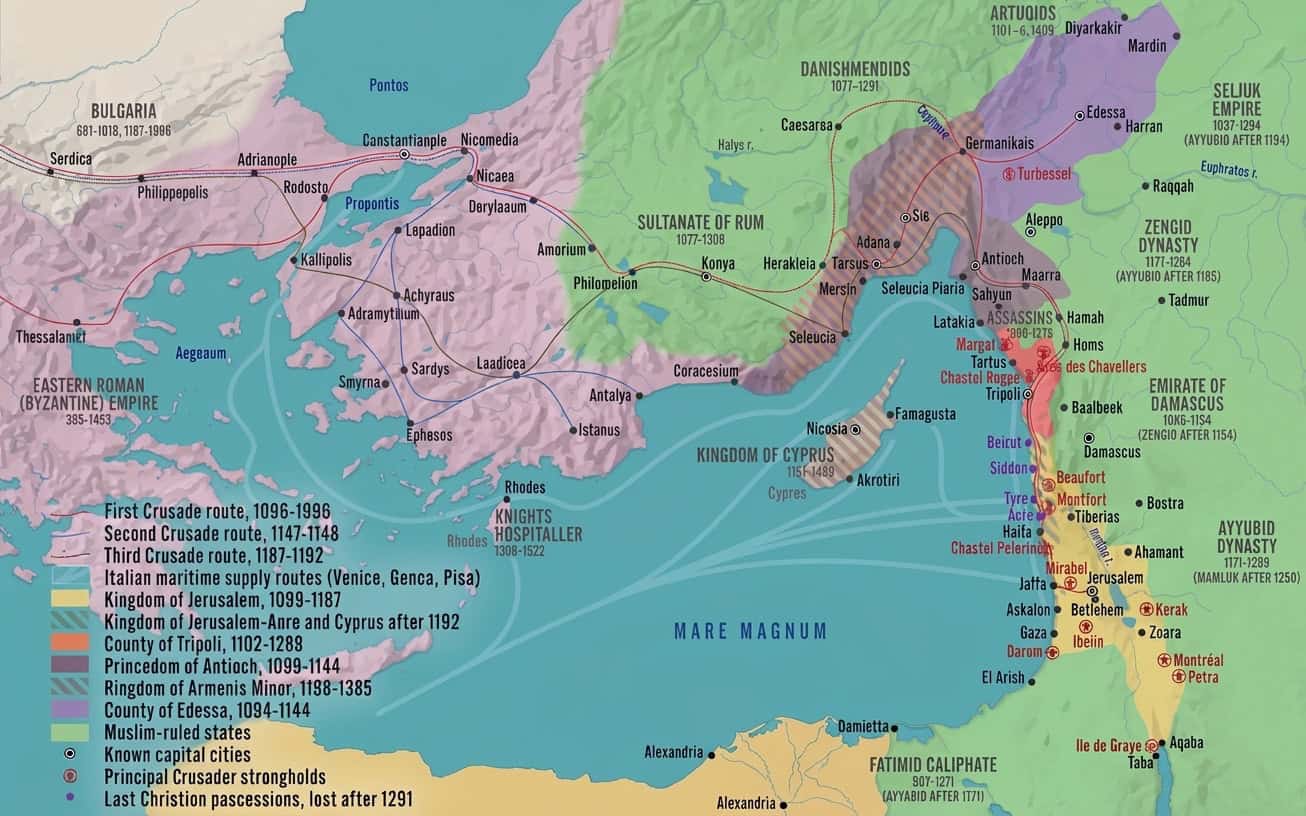
In 1268, the Mamluk army under Sultan Baybars captured Jaffa and demolished much of the city, including its fortifications, in order to prevent it from being used again as a Crusader base. The port, however, continued to play an important role in the region. Jaffa had been a major Mediterranean harbour for centuries, with a history extending back to the Phoenician period, and its proximity to Jerusalem made it an important gateway for both trade and pilgrims travelling to the Holy Land.
The Flight from Jaffa to Cyprus and the Armenian Connection
When Jaffa fell to the Mamluks in 1268, many of its inhabitants fled before the advancing armies, seeking refuge in safer lands. Among those who departed was Jacob I (also known as Jaques or Yacoub), an ancestor of the Tarajmeh family, who fled with his family. Their journey eventually brought them to Cyprus, where they reunited with relatives who had established themselves on the island several decades earlier.
At that time, Cyprus was among the few remaining Christian strongholds in the eastern Mediterranean, offering a place of refuge for families displaced by the political and military upheavals of the region.
Jacob I (Yacoub), the eldest of his siblings, was married to a princess. His mother descended from an Armenian dynasty. Their son, Simon I, thus inherited Armenian ancestry through his maternal lineage. This ancestral connection was detected also generations later through DNA testing in the genealogical research, which identified an Armenian component in the Tarajmeh heritage. Growing up in Cyprus, Simon I was exposed to the island’s rich cultural and linguistic diversity. From an early age, he acquired several languages, including Latin, Greek, and Arabic, reflecting the multicultural environment in which he was raised.
Following the premature death of his father, Jacob I, Simon I eventually left Cyprus and journeyed to Cilician Armenia, where he went to live among his relatives. This move marked a significant new chapter in the family’s history, strengthening its connection to its Armenian heritage and establishing a link between the family’s earlier presence in the eastern Mediterranean and its subsequent generations.
From 1265 to 1276, Baybars (Al-Malik al-Zahir Rukn al-Din Baybars al-Bunduqdari) was the fourth Mamluk sultan of Egypt and Syria, ruling from 1260 to 1277. He served first under the last Ayyubid ruler As-Salih Ayyub in Egypt. There were three Mamluks Sultans who ruled before him Egypt starting with al-Mu’izz Izz al-Din Aybak (who reigned from 1250 to 1257), followed by Aybak’s young son, al-Mansur Ali. Qutuz was the third Mamluk Sultan, reigning from November 1259 until his assassination in October 1260. Baybars launched a devastating campaign before his death in 1277, against the coastal cities still under Crusader control in Palestine, Lebanon and Syria. From the mid-1260s, the Mamluk Sultan Baybars who launched a series of campaigns that progressively dismantled the remaining Crusader strongholds along the eastern Mediterranean coast; Caesarea, Haifa and Arsuf fell in 1265, Safed in 1266, and Jaffa and Antioch in 1268. Latakia fell in 1287, while Tripoli fell in 1289. The remaining major Crusader stronghold of Acre fell in 1291, together with Tyre and Sidon and the last significant Crusader possessions on the mainland.
The Celicia Armenia Period (13th and 14th century)
Al-Malik al-Zahir Rukn al-Din Baybars al-Bunduqdari who ruled during the period 1260-1277, was known as Sultan Baybars, turned his attention eastward towards the Mongols. From their bases in Iran, the Mongols had felt free to invade Syria. Baybars prevented this by refortifying Syria, attacking the Armenians (who had been allies of the Mongols), and waging unrelenting war on the Mongols. As a result, Syria was pacified, secured, and united to Egypt. Sultan Baybars died in 1277.
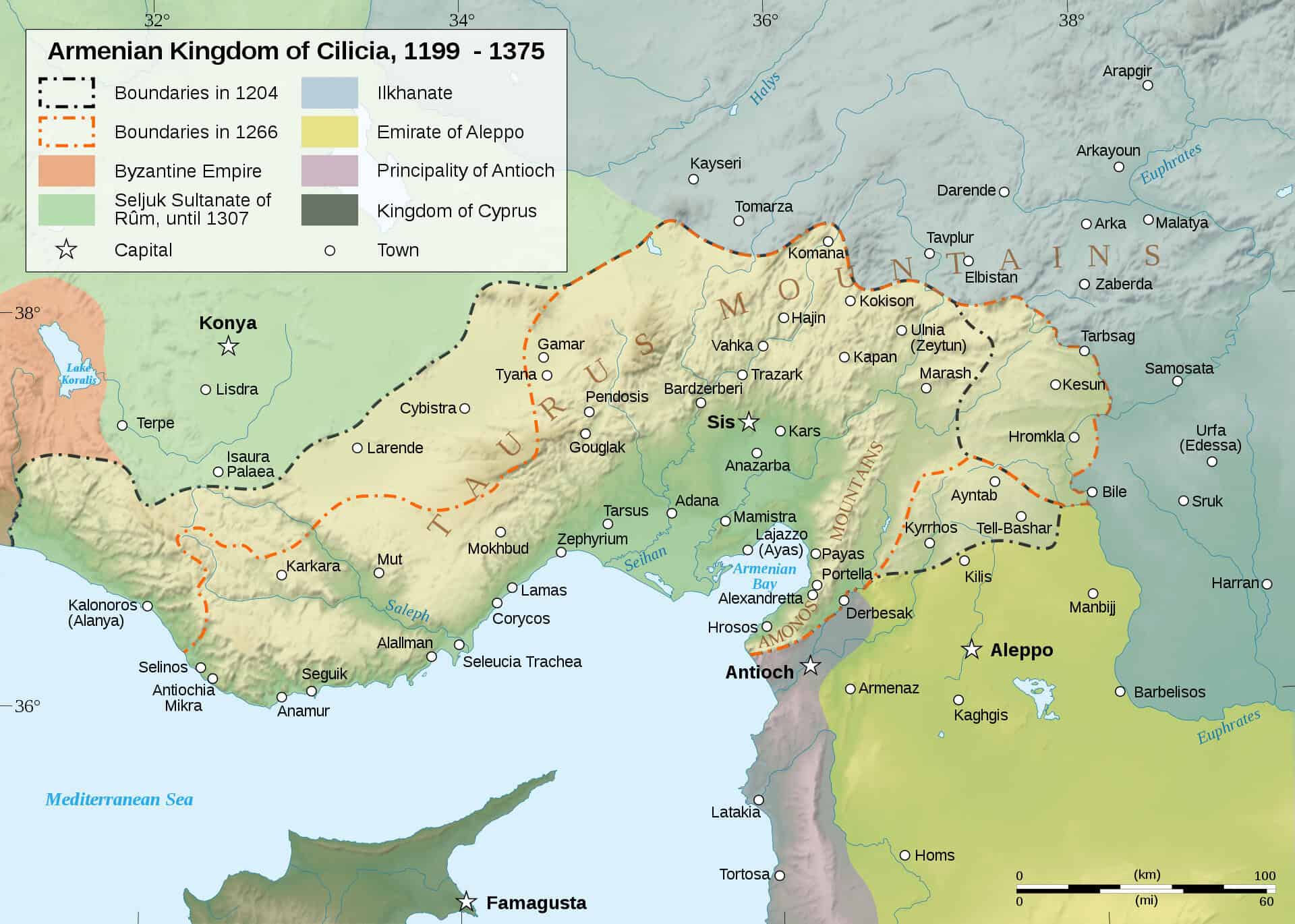
During the late thirteenth century, Cilician Armenia became a haven for refugees fleeing the collapse of the Crusader states and at the time stood as one of the most prosperous Christian kingdoms in the Near East. It maintained close alliances with the European Crusaders, the Byzantine world, and at times even the Mongol Empire.
Simon I was brought to Armenian Cilicia, probably because his father passed when he was young, he grew up to adulthood under the protection of his extended family. There he married and entered the kingdom’s commercial life. Cilicia occupied a strategic position between Anatolia, Syria, and the Mediterranean, which made trade one of its principal sources of wealth. Merchants from Italy, Spain, and elsewhere travelled regularly between Armenian ports, Cyprus, Palestine, and Europe, exposing the family to an international network of commerce and ideas.
The Franciscan connection in Cilician Armenia was strong and well established. Between 1289 and 1303, King Hettum II, who ruled from the Cilician capital of Sis, abdicated twice to take vows with the Franciscans, finally retiring from politics in 1303 to join the order. He passed the crown to his fourteen-year-old nephew, Levon III, and stayed on as the young king’s advisor and protector.
Hethum II ruled in several periods and abdicated twice before becoming regent. He became associated with the Franciscans and remained a major political figure. He was eventually murdered in 1307 together with his nephew Leo III/Levon III by the Mongol commander Bilarghu. The Franciscan Order maintained close contact with Armenian Christians through diplomatic, religious, and educational missions. These relationships would later prove significant when the family eventually returned to Palestine, and it was likely around this time that Simon’s family first developed ties with the Franciscans.
The oral tradition preserves memory of battles in Syria particularly Homs, here we provide some information about these battles at the end of 13th century and beginning of 14th century.
Stability in Cilicia proved temporary throughout the late thirteenth and early fourteenth centuries. Between 1281 and 1303, the Mongol Empire, backed by Armenian vassals, fought the Egyptian Mamluks for control of Syria, in battles that included the Second Battle of Homs in October 1281, Wadi al-Khazandar in 1299, and Marj al-Saffar in 1303. These are likely the battles in Syria to which Tarajmeh family tradition refers, when the Armenians joined the Mongols against the Mamluks.
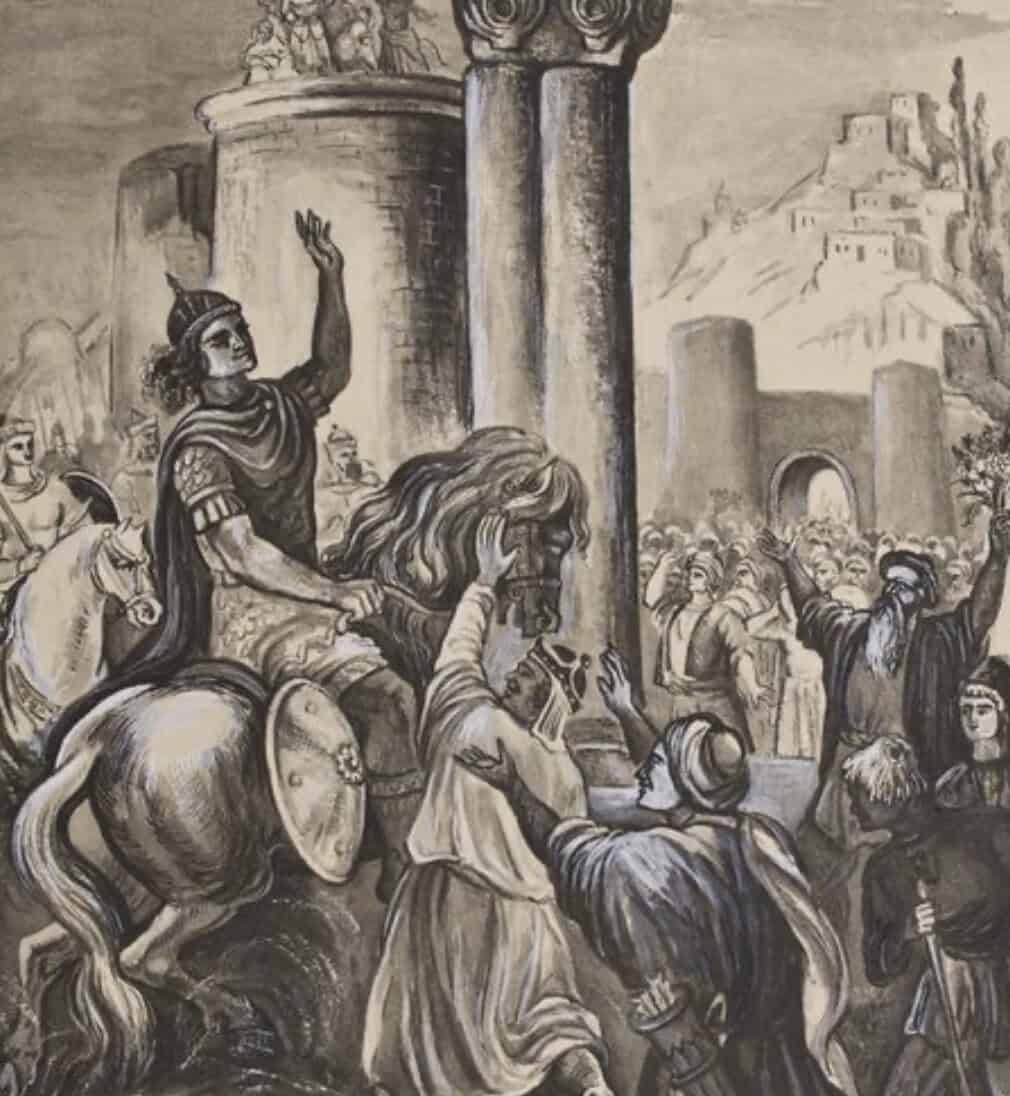
In the early fourteenth century, the Armenians joined the Mongols in several battles, including Homs and Marj al-Saffar in 1303. Both were lost to the Mamluks. These campaigns provide a plausible historical context for the family tradition that recalls Armenian participation alongside the Mongols in wars against the Mamluks. In 1305, Hethum II returned to active political and military leadership and, together with his nephew Leo III, participated in the defeat of a Mamluk force near Bagras. The victory provided only temporary relief. Hethum II and Leo III were killed in 1307 by the Mongol commander Bilarghu. The victory by Armenia Cilicia in 1305 led by Hettum II at Bagras over the Mamluks, was not enough to halt the Mamluks expansion into their territory.
In later years the Armenians faced devastating invasions, depopulation, but still could sustain itself even with the lack of support from Europe, as it still possessed a highly capable military. The political situation grew increasingly uncertain after the death of King Hethum II, whose reign had been marked by continual efforts to preserve Armenian independence through diplomacy and alliances. Following his death in 1307, internal divisions and continued Mamluk offensives accelerated the kingdom’s decline. It is within this historical context that Tarajmeh family history places the migration of Jacob’s descendants.

Armenian Cilician participated in Syria with their allies the Mongols in several expeditions. The siege of al-Rahba began in December 1312 and ended in January 1313. It was the final major military engagement of the Mamluk–Ilkhanid war, and the Mongol forces withdrew after failing to capture the fortress. It was the final major offensive launched by the Mongol Ilkhanate against the Mamluk Sultanate, led by Ilkhan Öljeitü and intended as a large-scale invasion of Syria. The campaign turned into a logistical failure due to extreme weather and fierce Mamluk resistance, forcing the Mongols to retreat across the Euphrates. Although some Armenian auxiliary units remained nominal vassals of the Ilkhanate, Cilicia contributed little to the frontline fighting. Öljeitü’s failure to capture key Syrian territories ended large scale Ilkhanid offensive ambitions in the region. His son and successor, Abu Sa’id, eventually signed a permanent peace accord with the Mamluks, the Treaty of Aleppo, in 1322.
The oral history mentions that the alliance with Mongols costed Cilicia Armenia dearly, and caused ruins to their trade business, which is remembered to be functioning on the way between Bugras and Marash.
The evidence suggests based on the above information; we can safely assume that the family’s ancestors left Jaffa during the Mamluk conquest of incursion and occupation in 1268. According to oral history, Jacob I’s son Simon I was still a child: as he attended school in Cyprus, and lived there for several years, and later settled in Cilician and Jacob I according to the oral history. The oral history mentions Simon I lived later in Cilicia Armenia, where he became a merchant and took part in the Battle in Syria and was engaged at a later stage in his life in trade and was engaged in Homs in battle (1303). If we assume that Simon I, was eight when he left Jaffa at the age of 8 years old and remained in Cyprus for five or six years, then he would have moved to Cilicia Armenia at about thirteen or fourteen. This would make his age around 13 or 14 years old; this will make Simon being born in the year 1255–56 and make him approximately forty eight or forty nine at the Battle of Homs.